Tampilkan postingan dengan label Screen. Tampilkan semua postingan

Kamis, 18 Oktober 2012

Oppo Find 5 has a FullHD 5-inch screen, pics and specs emerge

The Oppo Find 5 is no stranger to us, we've already heard the rumors. And this time around they seem to be confirmed to the letter.


The Oppo Find 5 has a 5-inch screen of FullHD resolution with a narrow 3mm bezel. It runs on 1.5Ghz Qualcomm's APQ8064 quad-core chipset with 2GB RAM. The aluminum unibody has a thickness of merely 6.9mm and the 12MP camera with a Sony backlit sensor allegedly doesn't bulge at all.


But that's not all, as there is also a nice and hefty 2500mAh battery inside to power the thing. Oh, and there's Android 4.1 Jelly Bean pre-installed.


Oppo Find 5


A 5-inch screen with Full HD resolution, now that does ring some bells, doesn't it? The recently introduced HTC J has similar specs but it's for Japan only.


The Oppo Find 5 will be available in 16GB and 32GB versions, priced at 3000 Chinese yuan (about US$475) and 3300 Chinese yuan (about US$520) respectively. Those are unsubsidized prices, but the Oppo Find 5 is reportedly coming with support for GSM and UMTS (with HSPA) networks, so it's compatible with China Unicom's network. This is also good news if you are planning to get one imported to Europe or America, as there are plenty of carriers to support those standards there.


I bet we'll be seeing even more devices with such monstrous screens come out soon.


Source (in Chinese) | Via


Powered By WizardRSS.com | Full Text RSS Feed | Amazon Plugin Wordpress | Android Forums | Wordpress Tutorials


View the original article here


Eliana Adriana Chandra Buana


Kamis, 13 September 2012

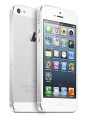
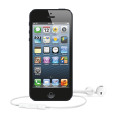
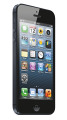
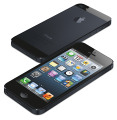
Apple iPhone 5 goes official with an A6 chipset and 4-inch screen

The iPhone 5 is now official. Apple has just unveiled its most latest iPhone to date.


As it turned out all the previous leaks of images and specs were on the spot. The Apple iPhone 5 features a 4-inch Retina display with a resolution of 1136x640 pixels (that's 326ppi), 100Mb LTE connectivity, dual-band Wi-Fi. The new iPhone is thinner - 7.6mm and lighter - 112 grams than its 4S counterpart.


The iPhone 5 runs on the Apple's latest A6 chipset, which is said to offer 2x faster processor and graphics performance. There is still no word on the number of cores and clock speeds though.


Apple iPhone 5


The camera features the same 8megapixel sensor as the on on the iPhone 4S, but the sensor is 25% smaller this time. There is a newly announced panorama mode, which obviously stitches together full res photos as the sample showcased had 28megapixel resolution.


The Apple iPhone 5 also comes with an upgraded front-facing camera, which now supports 720p video recording.


The new specs sheet features three microphones, noise-cancelling earpiece, smaller speaker and brand-new Lightning connector. The latter is 80% smaller, has 8 pins and is reversible. An adapter for the old 30-pin cables has been announced as well.


The iPhone 5 is naturally going to run on iOS 6. Apple didn't announced any new and unseen iOS feature tonight, so we assume you've probably know everything by now. Still, you are more than welcome to check out our iOS 6 extended preview here.


The pre-orders for the iPhone 5 starts on September 14. The couriers will be knocking on your doors as early as September 21 if you live in USA, Canada, UK, France, Germany, Australia, Japan, Singapore or Hong Kong. 22 more countries will join the fun on September 28, while before the end of the year the iPhone 5 markets number will grow up to 100.


Unsurprisingly, the Apple iPhone 5 is going to cost $199 with a two-year contract in the States. And as the new signing joins the team, the 3GS is out of the door.

The 8GB Apple iPhone 4 and the 16GB iPhone 4S models will be still available for free and $99 on a contract, respectively.


Finally, the iOS 6 free update will hit the previous generations of the iPhone on September 19.


Powered By WizardRSS.com | Full Text RSS Feed | Amazon Plugin Wordpress | Android Forums | Wordpress Tutorials


View the original article here


Eliana Adriana Chandra Buana


Senin, 06 Agustus 2012

The iPhone was born off the corner of a concept iPad's screen

The Apple/Samsung court battle is in its full swing and this week saw Apple's VPs Phil Schiller and Scott Forstall take the stand. Lots of intriguing information came out of their testimonies. To our greatest surprise not only was Apple already working on an iPad prototype when they went about conceiving the iPhone, but the first concept iPhone UI was born in the bottom corner of what was back then the iPad's prototype touchscreen.


Scott Forstall is Senior VP of iOS Software at Apple and he is one of the people responsible for the creation of all generations of iPhones, including the very first one.


In his testimony at the Apple vs. Samsung trial earlier this week, Forstall went on to explain how the first iPhone was born.


Reportedly, the engineers at Apple have been working on the iPad concept from as early as 2003 - that's fours years before the first iPhone was announced and seven years before the iPad itself was announced and released. Back then, they had set off to build "a beautiful tablet without a keyboard, without a hinge, where you have to fold it like a laptop."


In 2004, Apple's top brass was having a casual conversation about phones and it came out they all hated their phones. So, in Scott Forstall's words, that got them wondering...


"Could we use the technology we were doing with touch that we'd been prototyping for this tablet, and could we use that for a phone... So we took that tablet and took a small scrolling list... We built a small corner of it as a list of contacts.... You could tap on the contact, it would slide over and show you the information... It was just amazing. We realized that a touchscreen of the size that would fit in your pocket would be perfect for these phones."


Apple did not invent the touchscreen phone by all means. Windows Mobile phones had touchscreens way before that. LG even claims the title for the first feature phone with a capacitive touchscreen - the LG Prada, announced days after the first iPhone but released way before the iPhone made it to the market.


Yes, the iPhone was not the first touchscreen phone around but it surely revolutionized the industry, eventually leading to the demise of physical keys and keyboards. And the most amazing thing is that not only was it born off a prototype tablet, but it was the iPhone eco-system that paved the way for the iPad, which along with other tablets is now revolutionizing the personal computing as we know it.


Source


Powered By WizardRSS.com | Full Text RSS Feed | Amazon Plugin Wordpress | Android Forums | Wordpress Tutorials


View the original article here


Eliana Adriana Chandra Buana


Sabtu, 28 April 2012

Implementing Touch Screen Learning in Schools

New technological advancements in information technology are finding their way into the field of education and presenting ways in which to engage learners more effectively. Touch screen learning is one such innovation, not yet widely available in all schools but assisting learners with disabilities as well as providing basic learning tools for babies, toddlers and young children.

Examples of touchscreen devices include handheld gaming systems, ATM's, smartphones and directories in shopping malls and tourism offices. They are basically electronic display areas which are responsive to touch, either by the human hand or finger or by digital pens used to select small icons and on-screen options.

What the functionality of these displays entails for the end-user, is that these devices can be accessed and interacted with in a more direct way than via external means such as a keyboard or mouse. For this reason, it has proven to be more user-friendly and easy to understand for people who have difficulty using conventional computerized devices. Visually, it is more stimulating and may even serve to decrease time lags for those waiting in line to make payments, buy tickets or access basic information especially with regards to banking. In addition, it is a technology being used to simplify education and make it more accessible to all kinds of learners.

Touchscreen technology has functioned very well in helping learners with disabilities to develop much-needed skills. Case studies tell of cerebral palsy learners who learn to hold their heads up and improve muscle tone in their arms and hands. Additionally, games teaching math and literacy skills provide fun-filled and valuable education.

In another example, a quadriplegic student was assisted by a similar innovation that enabled him to communicate by means of a computer. The student made use of an on-screen keyboard, selecting the required letter by highlighting it and then pressing a button.

Foundational education for babies and toddlers is also improving in leaps and bounds due to technological products of this nature. Because today's children are able to relate to computerized devices and advanced technology easier than ever before, new products on the market automatically cater for these needs. Teams of forward-thinking designers are recognizing the pivotal role that technology plays in the development of babies, when implemented through the use of creative and innovative touchscreen devices.

Tablet PC's are being introduced into the classroom in many states, although lack of funds still remains a challenge for those schools who do not have the capacity to afford them. These PC's are custom-made for their purpose in schools, and are therefore durable, flexible and relatively lower priced than the average PC targeted at mainstream consumers, although at the moment, its implementation in schools is on a trial basis. Many are optimistic that its user-friendly nature will lead to easy training systems and better, more direct ways of using technology.

Gradually, just as this technology has been implemented in society in various ways, it is evident that its use in schools may become more prevalent. Touch screen learning is proving to be a way in which to engage not only learners with disabilities, but also learners who find it easy to relate, engage with and use this technology in all spheres of life, including for educational purposes.


Powered By WizardRSS.com | Full Text RSS Feeds | Amazon WordPress PluginHud 1 Settlement Statement


View the original article here


Eliana Adriana Chandra Buana


close
//batas iklanmelayang----